.png)


Optimize Email ROI 2025: Proven Tactics for E-Commerce Brands
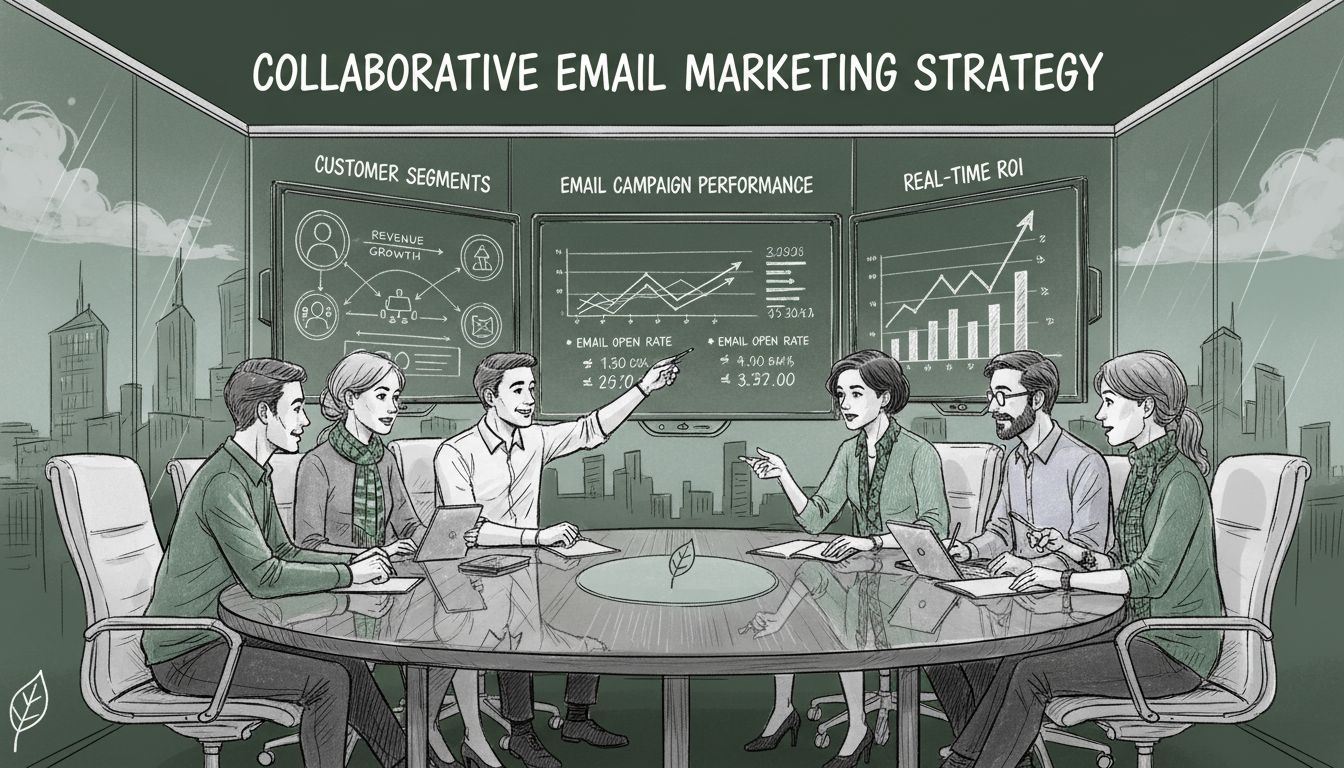
Nearly 90 percent of american businesses rely on email marketing, yet many never realize its full profit potential. With the digital landscape changing fast, a simple set-and-forget approach no longer delivers results. A careful review of your current strategy and a sharp focus on data can reveal hidden opportunities for growth. This guide breaks down the exact steps every american brand needs to audit, segment, automate, personalize, test, and optimize email campaigns for better customer engagement and higher revenue in 2025.
Table of Contents
Quick Summary
Key PointExplanation1. Conduct a thorough email auditAnalyze performance metrics and customer interactions to improve email campaigns effectively.2. Focus on ROI-driven segmentationCreate targeted segments based on customer behaviors to enhance marketing performance and relevance.3. Implement AI-driven automation flowsUse AI to tailor automated emails, enhancing customer interactions and improving engagement rates.4. Personalize messages for segmentsDevelop distinct email content strategies for each customer segment to maximize engagement and response.5. Systematically test and refine campaignsUse A/B testing on email elements to identify effective strategies and drive continuous improvement in results.
Step 1: Audit your current email program
Conducting a comprehensive email marketing audit is your strategic starting point for maximizing email return on investment in 2025. According to Marketing Profs, this process helps brands systematically evaluate and improve their existing email campaigns.
To begin your audit, start by pulling comprehensive performance data from your email service provider. Examine key metrics like open rates, click through rates, conversion rates, and unsubscribe percentages. Look for patterns such as which subject lines generate the highest engagement, which send times produce maximum opens, and which segments respond most actively to your messaging. Pay special attention to automation flows like welcome series, abandoned cart emails, and post purchase follow ups to identify potential optimization opportunities.
A critical warning for your audit process: dont just look at top line numbers. Dive deep into segmentation performance and understand how different customer groups interact with your email content. The Email Marketers guide on email marketing audit recommends breaking down metrics by customer lifecycle stage to reveal nuanced insights that generic reporting might miss. By conducting this meticulous review, youll be equipped to make data driven improvements that directly impact your email marketing ROI in the coming year.
The next step involves transforming these audit insights into a strategic optimization roadmap that will supercharge your email performance.
Step 2: Define ROI-focused segmentation strategies
Defining strategic email segmentation is crucial for maximizing your marketing performance and driving meaningful return on investment. According to Allied Academies, market segmentation provides a systematic approach to understanding and targeting specific customer groups more effectively.
Start by analyzing your customer data across multiple dimensions. Break down your audience using behavioral attributes like purchase history, engagement levels, customer lifetime value, and browsing patterns. Research from IJRPR demonstrates that precisely targeted marketing campaigns significantly improve overall campaign effectiveness. Create segments that reflect different stages of the customer journey: new subscribers, one time buyers, loyal repeat customers, and at risk customers. Each segment should have clear revenue potential and specific engagement strategies.
A critical tip for successful segmentation is dynamic refinement. Email Segmenting Tips and Tricks recommends continuously updating your segments as customer behaviors evolve. Dont treat segmentation as a one time project but as an ongoing optimization process. Track how each segment responds to different messaging, personalize your approach, and be prepared to adjust your strategies based on performance data.

With your ROI focused segments defined, youre now ready to develop targeted email content that speaks directly to each customer groups unique needs and preferences.
Step 3: Deploy AI-driven automation flows
Leveraging artificial intelligence to create strategic email automation flows represents a transformative approach to enhancing marketing performance. According to International Journal of Scientific Research, data analytics plays a pivotal role in modern marketing by enabling more precise customer engagement and improving overall return on investment.
Begin by mapping out key customer journey touchpoints where AI can optimize communication. Develop sophisticated automation flows that trigger personalized emails based on specific customer behaviors like abandoned cart interactions, post purchase experiences, and engagement milestones. Preprints highlights the importance of identifying high value customer profiles to create more targeted messaging. Your AI driven automation should include intelligent workflows such as welcome series for new subscribers, re engagement campaigns for inactive customers, and predictive product recommendation sequences that adapt in real time based on individual customer interactions.
A critical implementation tip is to continuously monitor and refine your AI automation flows. The Best Email Flows to Boost Engagement recommends establishing clear performance benchmarks and using machine learning algorithms to progressively optimize message timing, content, and segmentation. Dont view these flows as static templates but as dynamic systems that evolve with your customer data.

With your AI driven automation flows now strategically deployed, youre positioned to deliver hyper personalized experiences that dramatically improve customer engagement and email marketing performance.
Step 4: Personalize messaging for key customer segments
Creating highly targeted email messaging that resonates with specific customer segments is essential for maximizing marketing effectiveness. According to Allied Academies, market segmentation provides a strategic approach to understanding and addressing diverse customer needs more precisely.
Start by developing unique content strategies for each customer segment you identified earlier. Research from IJRPR demonstrates that specifically targeted marketing campaigns significantly improve overall performance. For new subscribers, craft welcoming and educational content that introduces your brand value. For loyal customers, create exclusive offers and personalized recommendations that make them feel valued. Develop re engagement messaging for inactive customers that reignites their interest with compelling incentives. Your goal is to make each customer feel like the message was crafted specifically for them.
A critical personalization tip is to move beyond basic demographic information. What Is Email Personalization recommends leveraging behavioral data purchase history, browsing patterns, and previous interactions to create truly individualized experiences. Use dynamic content blocks that adapt based on customer preferences, implement personalized product recommendations, and craft subject lines that speak directly to each segments unique motivations and challenges.
With your personalized messaging strategies in place, youre now equipped to deliver email communications that feel intimate relevant and compelling to each customer segment.
Step 5: Test and refine campaign performance
Continuous performance testing is the cornerstone of maximizing email marketing return on investment. According to HS Talks, removing ambiguity around marketing ROI requires systematic measurement and strategic analytics aligned with financial contribution.
Implement a comprehensive testing strategy that goes beyond basic metrics. International Journal of Scientific Research emphasizes the pivotal role of data analytics in enhancing customer engagement and return on investment. Start by conducting rigorous A/B tests on critical email elements such as subject lines, content variations, send times, and call to action designs. Systematically compare performance across different audience segments to understand what resonates most effectively. Track key performance indicators like open rates, click through rates, conversion rates, and revenue generated from each email campaign.
A critical testing tip is to focus on incremental improvements and maintain a scientific approach. Email A/B Testing: The Basics recommends testing only one variable at a time to ensure clear insights into what drives performance. Establish a consistent testing cadence where you continuously experiment, measure results, and implement learnings. Remember that successful optimization is an ongoing process of small strategic adjustments rather than massive overhauls.
With your testing and refinement strategies in place, youre now prepared to transform your email marketing from a static communication channel into a dynamic revenue generation engine.
Step 6: Analyze results and adjust strategies
Transforming raw data into actionable insights is the final critical step in optimizing your email marketing performance. According to HS Talks, removing ambiguity around marketing ROI requires systematic measurement and strategic analytics aligned with financial contribution.
Begin by creating a comprehensive performance dashboard that captures holistic metrics across your email campaigns. International Journal of Scientific Research emphasizes the pivotal role of data analytics in enhancing customer engagement and return on investment. Analyze key performance indicators including conversion rates, revenue per email, segment performance, and customer lifetime value. Look for patterns that reveal which strategies generate the highest returns and which segments respond most positively to your messaging. Pay special attention to nuanced metrics that go beyond surface level statistics.
A critical analysis tip is to approach your data with both quantitative rigor and qualitative curiosity. A/B Testing and Revenue Increase recommends developing a systematic approach to interpreting results where you not only examine the numbers but also understand the underlying customer behaviors driving those metrics. Create a quarterly review process where you document insights, adjust your strategies, and continuously refine your email marketing approach based on empirical evidence.
With a robust analysis framework in place, youre now equipped to turn your email marketing from a static communication channel into a dynamic revenue generation system that evolves with your customers.
Unlock Your Email Marketing Potential with Proven Expertise
Struggling to transform your email marketing into a powerful revenue engine is a common challenge for e-commerce brands looking to boost ROI in 2025. This article highlights the importance of a thorough audit, ROI-focused segmentation, AI-driven automation flows, and personalized messaging—all complex strategies that demand expert execution. If you’ve noticed stagnant open rates, low conversion, or missed opportunities in customer lifecycle engagement, these pain points require a strategic partner who can bring deep data insights and creative automation together.
At The Email Marketers, we specialize in precisely those solutions. Our team crafts smart segmentation strategies, builds high-converting automated flows, and delivers personalized email campaigns that deeply engage your audience. We help brands like yours convert email interest into meaningful sales and lifetime value through proven retention marketing tactics. Ready to stop guessing and start growing your email ROI with expert guidance? Visit us now to learn how we can help optimize your campaigns and accelerate your growth with tailored, AI-driven strategies designed for e-commerce success.
Explore our approach and get started today at The Email Marketers. Take the next step to transform your email program into a consistent profit driver before your competitors do.
Frequently Asked Questions
How can I audit my existing email marketing program for better ROI?
Conduct a comprehensive email marketing audit by pulling performance data from your email service provider. Focus on key metrics such as open rates, click-through rates, and conversion rates to identify improvement areas within the next month.
What segmentation strategies should I implement to enhance email marketing performance?
Define ROI-focused segmentation by analyzing customer data based on behaviors like purchase history and engagement levels. Aim to create distinct segments representing different stages of the customer journey to increase campaign effectiveness within 30 days.
How can I use AI to automate my email marketing efforts?
Leverage AI to create automation flows that trigger personalized emails based on customer behaviors such as abandoned carts or post-purchase actions. Start implementing AI-driven workflows over the next few weeks to enhance communication and engagement with your audience.
What types of personalized messaging should I create for different customer segments?
Develop unique content strategies tailored to each customer segment’s needs, such as welcoming new subscribers or incentivizing inactive customers. Personalize messages based on behavioral data to improve response rates and engagement by at least 15%.
What elements should I test to optimize my email campaigns?
Focus on A/B testing key elements like subject lines, content variations, and send times to see what resonates most with your audience. Implement a consistent testing cadence to make data-driven adjustments, improving overall performance over time.
How should I analyze my email marketing results for ongoing improvement?
Create a performance dashboard to track key metrics like conversion rates and revenue per email. Analyze these results regularly, adjusting your strategies based on quarterly insights to continuously optimize your email marketing system.


