.png)


Measuring ROI in Email Marketing: Complete Guide

More than 80 percent of marketers say email delivers the highest return on investment compared to other digital channels. Whether you run a small shop or a large e-commerce brand, knowing exactly how much value your email campaigns bring can shape smarter business decisions. Clear strategies and precise calculations let you see not just the numbers, but the real impact of every message you send, guiding you toward stronger growth and lasting results.
Table of Contents
Key Takeaways
PointDetailsUnderstanding ROI CalculationEmail marketing ROI is calculated using the formula: (Revenue - Cost) ÷ Cost × 100, highlighting profitability.Importance of Key MetricsTracking metrics like conversion rates and open rates is essential for assessing campaign performance and optimizing strategies.Awareness of Common PitfallsAvoid focusing solely on vanity metrics and ensure consistent tracking to gain an accurate picture of ROI.Leveraging Indirect BenefitsConsider long-term customer value and engagement metrics to fully understand the impact of email marketing efforts.
Defining ROI in Email Marketing
Return on Investment (ROI) in email marketing represents the critical financial metric that quantifies the profitability and effectiveness of your email campaigns. According to Wikipedia, ROI measures the revenue generated per dollar spent on marketing activities, including targeted email strategies.
To calculate email marketing ROI, businesses track specific financial outcomes directly attributable to their email campaigns. This typically involves analyzing key performance indicators such as total revenue generated, conversion rates, and the specific costs associated with creating and sending email communications. Revenue tracking becomes essential in determining whether your email marketing efforts are generating meaningful financial returns.
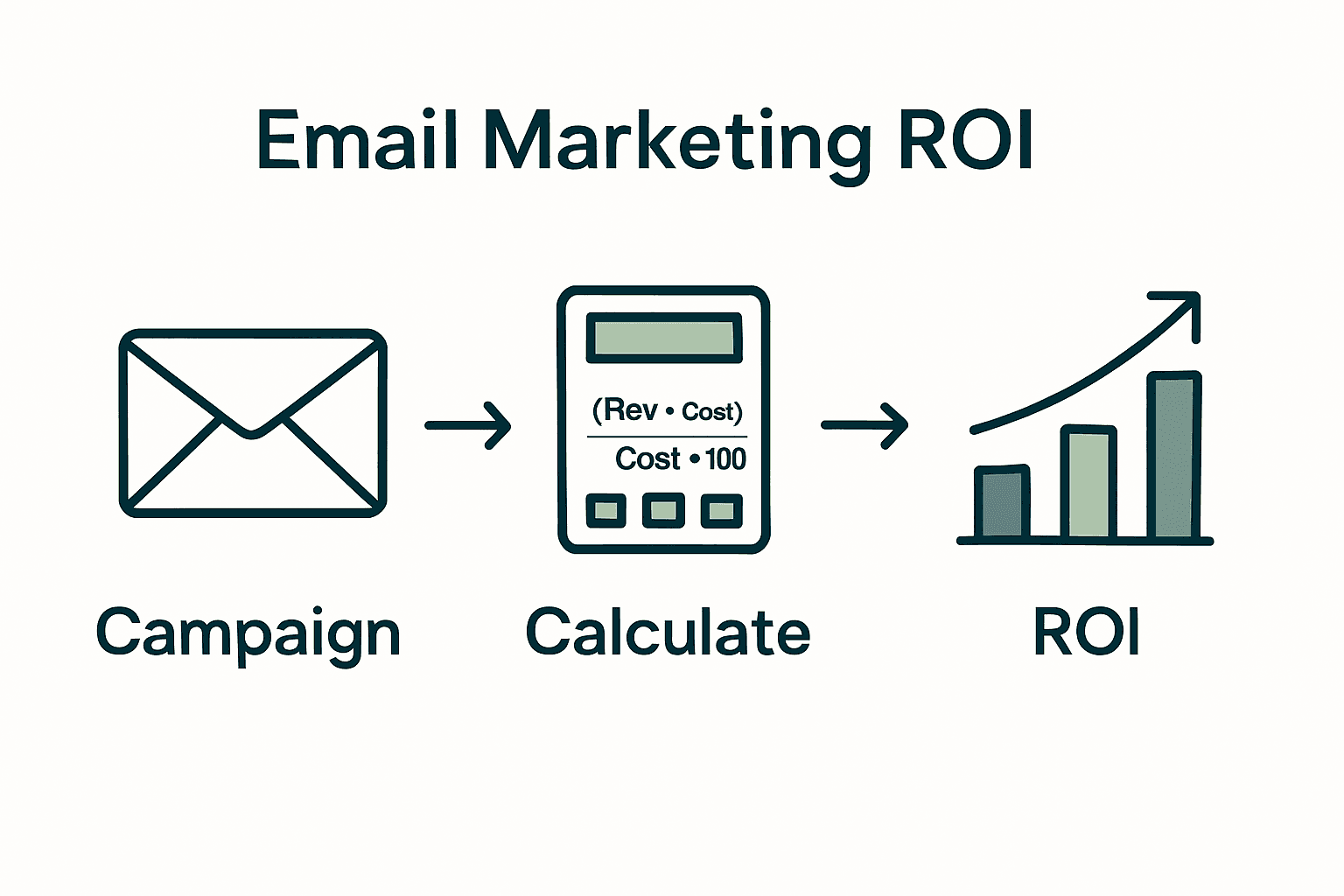
The core formula for email marketing ROI remains straightforward: (Revenue Generated from Email Campaign - Cost of Email Campaign) ÷ Cost of Email Campaign × 100 = ROI Percentage. CultureHive emphasizes that understanding this calculation helps marketers make data-driven decisions and optimize their email marketing strategies.
Effective ROI measurement goes beyond simple revenue calculations. Smart marketers also consider indirect benefits like customer retention, brand awareness, and long-term customer lifetime value. These nuanced metrics provide a more comprehensive view of email marketing’s true impact, helping businesses understand the full potential of their email communication strategies. Understanding Email Marketing Metrics can provide deeper insights into these comprehensive evaluation techniques.
Key Metrics for Calculating ROI
Calculating email marketing ROI requires tracking multiple critical metrics that provide a comprehensive view of campaign performance. Rightpoint highlights several essential metrics that businesses must consider when evaluating their email marketing effectiveness.
Key performance indicators crucial for ROI calculation include:
According to Litmus, these metrics help marketers understand not just the financial return, but the overall engagement and effectiveness of their email campaigns. Engagement metrics provide deeper insights beyond simple revenue calculations, revealing how compelling and relevant your email content truly is.

To gain comprehensive insights, smart marketers combine quantitative and qualitative metrics. This means looking beyond basic numbers and understanding the customer journey. For instance, What Email Marketing KPIs Should You Be Tracking can help you dive deeper into the nuanced world of email marketing performance analysis, ensuring you’re not just measuring numbers, but understanding the story behind them.
Common Methods for ROI Measurement
CultureHive outlines several systematic approaches to measuring email marketing ROI that go beyond simple revenue calculations. These methods help businesses understand the true financial impact of their email campaigns by considering both direct and indirect value generation.
Key ROI measurement methods include:
According to the ROI Institute, advanced ROI measurement requires a holistic approach that considers multiple data points. Comprehensive tracking involves understanding not just immediate sales, but also customer acquisition costs, retention rates, and long-term engagement metrics.
Practical ROI measurement goes beyond numbers.
Smart marketers recognize that What is the Average ROI for Email Marketing? provides context for interpreting your specific campaign performance, helping you benchmark your results against industry standards and identify areas for strategic improvement.
Real-World E-commerce ROI Examples
Rightpoint reveals compelling real-world examples of e-commerce businesses transforming their marketing performance through strategic email campaigns. These case studies demonstrate how targeted email strategies can dramatically improve revenue and customer engagement across different industry segments.
Typical ROI success scenarios include:
Litmus highlights that successful e-commerce businesses don’t just track metrics—they create data-driven narratives that transform casual browsers into loyal customers. This approach goes beyond simple transactional communications, focusing on building meaningful customer relationships.
To gain deeper insights into creating impactful email strategies, 3 Examples of an Amazing Email Marketing Strategy for Ecommerce Businesses can provide practical blueprints for brands looking to elevate their email marketing performance and drive substantial ROI.
Pitfalls and Mistakes to Avoid
CultureHive highlights critical errors that can derail accurate email marketing ROI measurement. Many businesses inadvertently undermine their analytical efforts by falling into common measurement traps that distort their understanding of true campaign performance.
Common ROI measurement mistakes include:
ROI Institute emphasizes that accurate measurement requires a holistic approach that goes beyond simple number crunching. Successful marketers understand that ROI is not just about immediate financial return, but about understanding the complete customer journey and long-term value.
To prevent these common pitfalls, brands should leverage strategic resources like The Ultimate Email Marketing Strategy for Ecommerce Guide to develop a more comprehensive and nuanced approach to measuring email marketing performance.
Unlock True Email Marketing ROI with Expert Strategy
Measuring the full impact of your email campaigns goes beyond tracking open rates and clicks. As the article highlights, understanding the complete customer journey and avoiding common pitfalls like vanity metric obsession are critical to unveiling real return on investment. If you find yourself challenged by inconsistent ROI measurement or want to move past basic calculations toward a holistic approach including lifetime value and attribution modeling, you are not alone.
At The Email Marketers, we specialize in transforming complex email marketing data into actionable growth strategies tailored for e-commerce brands. Our expert team builds AI-driven, automated flows and advanced segmentation techniques that drive higher conversion rates and increase customer lifetime value. We help growth-focused retailers avoid mistakes such as neglecting hidden costs or single-channel attribution while unlocking durable ROI from every campaign.
Ready to move beyond guesswork and start seeing measurable, lasting results from your email marketing? Explore how our strategic retention marketing solutions connect every email touchpoint to your bottom line and elevate revenue. Don’t wait to discover the difference that expert partnership can make for sustained performance. Visit The Email Marketers now and let’s optimize your email marketing ROI together.
Frequently Asked Questions
What is ROI in email marketing?
Return on Investment (ROI) in email marketing measures the profitability and effectiveness of email campaigns. It quantifies the revenue generated per dollar spent on the campaigns.
How do I calculate email marketing ROI?
To calculate email marketing ROI, use the formula: (Revenue Generated from Email Campaign - Cost of Email Campaign) ÷ Cost of Email Campaign × 100. This gives you the ROI percentage for your campaign.
What key metrics should I track for email marketing ROI?
Important metrics to consider include Conversion Rate, Revenue per Email, Click-Through Rate (CTR), and Open Rate. These metrics help you evaluate both the financial return and overall engagement of your campaigns.
What are some common mistakes to avoid when measuring email marketing ROI?
Common mistakes include focusing on vanity metrics like open rates instead of conversions, using inconsistent tracking methods, neglecting hidden costs, and failing to recognize the interconnected nature of marketing touchpoints.


