.png)


How to Personalize Email Content for High Conversions

Over 60 percent of american marketers say personalization leads to higher engagement in their email campaigns. Delivering the right message to the right person at the right time is no longer just a strategy, it is a necessity for brands hoping to stand out. Understanding how to use audience data, dynamic content, and automation can set your email marketing apart and help you form real connections with your customers.
Table of Contents
- Step 1: Define Audience Segments Using Customer Data
- Step 2: Gather and Integrate Relevant Personalization Variables
- Step 3: Craft Dynamic Email Templates With Targeted Messaging
- Step 4: Automate Personalized Campaigns Based On User Behavior
- Step 5: Test and Analyze Performance For Continual Improvement
Quick Summary
| Key Insight | Explanation |
|---|---|
| 1. Define customer segments | Segmenting your audience helps tailor email campaigns to resonate with specific groups. |
| 2. Integrate personalization data | Collect and analyze customer data to create comprehensive profiles for targeted messaging. |
| 3. Use dynamic email templates | Build flexible templates that adjust content based on customer attributes and preferences. |
| 4. Automate based on behavior | Implement automation to send timely, relevant emails triggered by specific customer actions. |
| 5. Test for continual improvement | Use A/B testing to refine email strategies, optimizing engagement and conversion rates. |
Step 1: Define audience segments using customer data
Defining audience segments transforms generic email campaigns into precision marketing tools. By categorizing customer interactions based on unique attributes, you can craft messages that resonate deeply with specific groups.
Customer segmentation starts with collecting comprehensive data points that reveal meaningful patterns. These attributes typically include demographic information like age, location, and income, behavioral patterns such as purchase history and website interactions, and psychographic characteristics reflecting interests and lifestyle choices. Effective segmentation goes beyond basic demographics by uncovering nuanced customer motivations and preferences.
To build powerful segments, start by analyzing your existing customer database. Look for recurring themes like purchasing frequency, product preferences, engagement levels, and customer lifetime value. Group customers who share similar characteristics into distinct segments that allow for targeted messaging. Pro tip: Begin with 3-5 core segments and refine them over time as you gather more insights. The goal is creating personalized experiences that make each customer feel understood and valued.
Once you establish your initial segments, you will be ready to design tailored email content that speaks directly to each group’s unique needs and desires.
Step 2: Gather and integrate relevant personalization variables
To create powerful personalized email campaigns, you need to systematically collect and analyze customer data that reveals meaningful insights about your audience. Data segmentation enables you to break down customer information into specific, actionable groups that drive targeted marketing strategies.
Start by identifying key personalization variables across multiple touchpoints. These might include demographic details like age and location, behavioral data such as purchase history and website interactions, engagement metrics like email open rates, and preference indicators including product interests and communication frequency. The goal is building a comprehensive customer profile that goes beyond surface level information and captures nuanced customer motivations.
To effectively integrate these variables, implement robust data collection methods that respect customer privacy and provide clear value. Use signup forms, preference centers, progressive profiling, and behavioral tracking to gradually build rich customer profiles. Pro tip: Always give customers control over their data and be transparent about how you plan to use their information. By creating a trust-based approach to data collection, you will not only gather more accurate personalization variables but also strengthen customer relationships.
With your personalization variables carefully gathered and integrated, you are now prepared to design highly targeted email experiences that feel individually crafted for each recipient.
Step 3: Craft dynamic email templates with targeted messaging
Crafting dynamic email templates requires a strategic approach that transforms generic communications into personalized experiences. Targeted email marketing enables you to create messages that speak directly to specific customer segments and their unique needs.
Customer segmentation strategies reveal that different audience groups require distinctly tailored messaging. For instance, new subscribers might receive welcome sequences highlighting brand values, while frequent buyers could get advanced product recommendations. When designing templates, build modular components that can be dynamically swapped based on customer attributes like purchase history, browsing behavior, or demographic information. This approach allows you to create flexible email frameworks that adapt seamlessly to individual customer profiles.

To maximize template effectiveness, develop a core structure with placeholders for personalized content. Pro tip: Use merge tags that automatically populate specific customer details, creating an illusion of a one-to-one conversation. Focus on creating emotional resonance by addressing customer pain points and aspirations specific to each segment. By combining data-driven insights with compelling storytelling, you can craft email templates that not only capture attention but also drive meaningful engagement.
With your dynamic templates ready, you are prepared to implement a sophisticated personalization strategy that feels both intelligent and intimately relevant to each recipient.
Step 4: Automate personalized campaigns based on user behavior
Automating personalized email campaigns transforms your marketing from generic broadcasts to intelligent, responsive interactions. Email automation provides the technological backbone for creating sophisticated, behavior-triggered communication strategies.
Customer segmentation approaches enable businesses to design precise automated workflows that respond to specific user actions. Implement trigger-based campaigns that activate based on critical behaviors like website visits, abandoned cart events, purchase history, or engagement levels. For example, a new subscriber might receive a welcome series, while a customer who frequently browses but rarely purchases could get a targeted incentive email. Develop complex automation rules that consider multiple behavioral signals, allowing your campaigns to adapt dynamically and feel incredibly personalized.
To maximize automation effectiveness, create a comprehensive mapping of potential customer journeys and corresponding trigger points. Pro tip: Build flexible workflow sequences with conditional branches that adjust messaging based on real time customer interactions. This approach ensures that each automated email feels like a natural continuation of the customer experience rather than a generic marketing message. By combining behavioral data with intelligent automation, you can create email campaigns that feel intuitive, timely, and uniquely tailored to each individual.
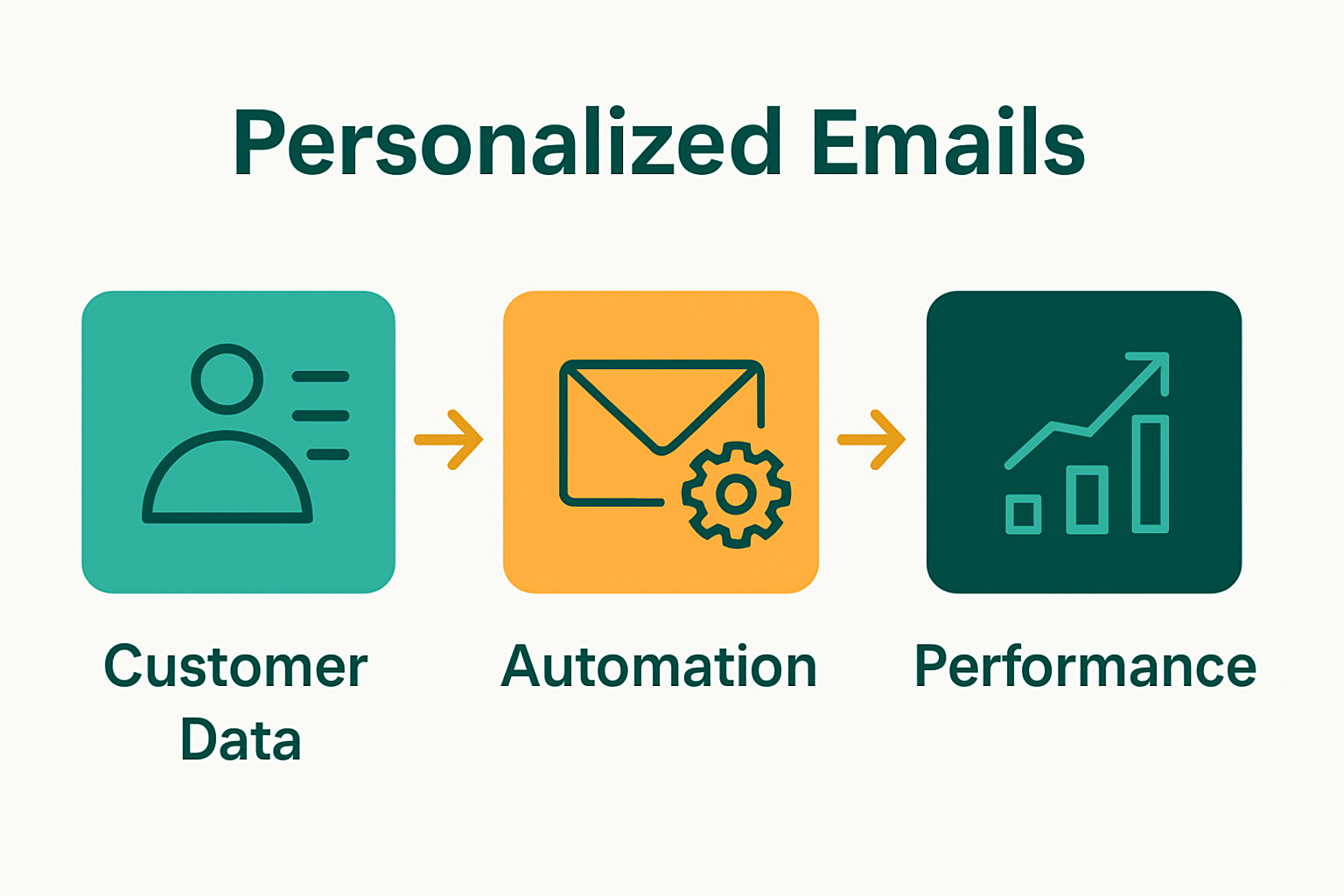
With your automated campaigns in place, you are now equipped to deliver precisely timed, highly relevant communications that resonate with your audience.
Step 5: Test and analyze performance for continual improvement
Performance testing transforms email personalization from a static strategy into a dynamic, evolving process. A/B testing techniques provide the analytical framework for understanding what truly resonates with your audience and driving continuous optimization.
Data segmentation strategies enable businesses to explore nuanced performance insights across different customer groups. Implement comprehensive testing protocols that evaluate multiple variables including subject lines, email content, send times, personalization depth, and call to action effectiveness. Track key metrics such as open rates, click through rates, conversion percentages, and revenue generated to build a holistic understanding of your email campaigns performance. Compare results across different customer segments to identify which personalization approaches generate the most meaningful engagement.
To maximize your analysis, develop a systematic approach to performance evaluation. Pro tip: Create a centralized dashboard that tracks performance metrics in real time, allowing you to quickly identify trends and adjust strategies. Regularly schedule comprehensive review sessions where you deep dive into your email campaign data, looking for subtle patterns and opportunities for refinement. By treating performance analysis as an ongoing process of incremental improvement, you can continuously adapt your personalization strategies to deliver increasingly compelling customer experiences.
With a robust testing and analysis framework in place, you will transform your email marketing from a static communication channel into a dynamic, responsive engine of customer engagement.
Unlock High-Converting Personalized Email Campaigns Today
Struggling to transform generic email blasts into deeply personalized messages that truly engage your audience? This article highlights how defining precise customer segments, gathering rich personalization variables, and automating behavior-driven workflows are critical to boosting conversions and building loyal customer relationships. You are not alone if your current email efforts fall short in creating meaningful connections or driving repeat purchases. Key challenges include crafting dynamic templates that adapt to unique customer needs and continuously optimizing campaigns through detailed testing and analysis.
At The Email Marketers, we specialize in overcoming these very obstacles for e-commerce brands committed to retention marketing excellence. Our AI-powered strategies combine data-driven segmentation with expert campaign automation to deliver emails that feel like one-to-one conversations. Whether you want to revamp your existing workflows or develop fully integrated personalized journeys, visit our homepage to discover how our team builds high-converting campaigns that turn customers into loyal fans. Start maximizing your customer lifetime value with tailored email and SMS marketing that delivers real results now.
Frequently Asked Questions
How can I effectively define audience segments for email personalization?
Start by collecting comprehensive data points such as demographics, behavior, and interests. Analyze your customer database for recurring themes and group similar customers into 3-5 core segments to tailor your messaging accordingly.
What key personalization variables should I gather for my email campaigns?
Focus on collecting demographic details, behavioral data, and engagement metrics. Implement signup forms and preference centers to gather these insights over time, ensuring customers understand how their data will be used.
How do I create dynamic email templates for personalized messages?
Design email templates with modular components that can be customized based on customer attributes. Use merge tags to automatically include personal details and structure content to address specific pain points relevant to each audience segment.
What are the best practices for automating personalized email campaigns?
Implement trigger-based campaigns that respond to specific customer actions, such as abandoned carts or frequent browsing. Map potential customer journeys and develop flexible workflows that adjust messaging based on real-time data to enhance personalization.
How can I test and optimize my email personalization strategies?
Utilize A/B testing to evaluate variables like subject lines and content type, tracking key metrics such as open rates and conversions. Regularly review your campaign performance in a centralized dashboard to identify trends, aiming for continuous improvement within each audience segment.


