.png)


Email vs SMS Marketing: Complete Expert Guide

Over 60 percent of marketers now blend email and SMS to reach customers instantly and personally. These channels are far more than basic tools—they deliver powerful, direct ways to engage people where they already spend time. As customer habits shift toward mobile and personalized content, understanding how email and SMS can complement each other unlocks new opportunities for businesses to boost engagement, strengthen loyalty, and drive results.
Table of Contents
Key Takeaways
PointDetailsEmail vs. SMS MarketingEmail marketing allows for detailed content, while SMS marketing focuses on brevity and immediacy. Each serves unique engagement strategies in digital communications.Campaign AutomationBoth channels utilize marketing automation for audience segmentation, personalized messaging, and performance tracking, enhancing campaign effectiveness.Legal ComplianceSuccessful marketing requires adherence to distinct regulations; SMS mandates explicit user consent, while email allows for complex consent mechanisms.Integrated StrategiesE-commerce success lies in leveraging both channels together, optimizing customer journeys with timely and relevant communications for enhanced engagement and conversions.
Defining Email And SMS Marketing Channels
Email and SMS marketing represent two powerful digital communication strategies designed to help businesses connect directly with their target audiences. According to Wikipedia, email marketing involves sending commercial messages to a group via email, with the primary aims of enhancing customer relationships, encouraging brand loyalty, and driving sales.
On the mobile side, SMS marketing leverages text messaging as a direct communication channel. Wikipedia describes mobile marketing as a strategy that encompasses reaching audiences on mobile devices through channels like SMS, MMS, and mobile apps, providing personalized and often location-sensitive information. These channels offer businesses unique opportunities to engage customers with targeted, immediate communications.
Both email and SMS marketing share core objectives: delivering timely, relevant information that drives customer engagement and conversions. However, they differ significantly in their approach and technical implementation. Email marketing typically supports rich media, longer content, and more complex design elements, while SMS marketing thrives on brevity, immediacy, and direct communication. Discover the benefits of SMS marketing to understand how this channel can complement your existing digital marketing strategy.
Key distinctions between these channels include:
Understanding these nuanced differences allows marketers to strategically leverage both email and SMS to create comprehensive, multi-channel communication approaches that maximize customer interaction and drive business growth.
How Email And SMS Campaigns Function
Marketing campaigns through email and SMS operate using sophisticated automated systems that transform traditional communication strategies. According to Wikipedia, marketing automation in email campaigns utilizes specialized software to segment audiences, target specific customer groups, schedule messages precisely, and track comprehensive marketing performance metrics.
CM.com explains that SMS marketing specifically involves sending timely, personalized messages to individuals who have explicitly provided consent. These text message campaigns typically include strategic calls to action and often link to more comprehensive digital content, creating a seamless engagement pathway for potential customers.
Both email and SMS campaigns share core functional mechanics that drive their effectiveness. These mechanisms include:
The technical infrastructure behind these campaigns relies on robust marketing platforms that integrate customer data, communication preferences, and behavioral insights. Learn more about strategic text message marketing approaches to understand how businesses can leverage these powerful communication channels effectively.
Understanding the intricate functioning of email and SMS campaigns allows marketers to design more intelligent, responsive, and customer-centric communication strategies. By leveraging advanced automation tools and respecting user preferences, brands can create highly targeted campaigns that resonate with their specific audience segments, driving engagement and ultimately, conversions.

Key Differences Between Email And SMS Strategies
Email and SMS marketing strategies diverge significantly in their approach, content delivery, and audience engagement techniques. According to TextMagic, these channels are uniquely suited for different marketing objectives - email campaigns excel in delivering detailed product launches and comprehensive information, while SMS marketing shines in providing real-time alerts and timely reminders.
The strategic nuances between these channels manifest in several critical dimensions. Email marketing offers rich, visually complex content with extensive storytelling capabilities, supporting graphics, multiple sections, and in-depth product descriptions. SMS marketing, conversely, demands razor-sharp concision, typically limiting messages to 160 characters and focusing on immediate, action-oriented communication.
Key strategic differences include:
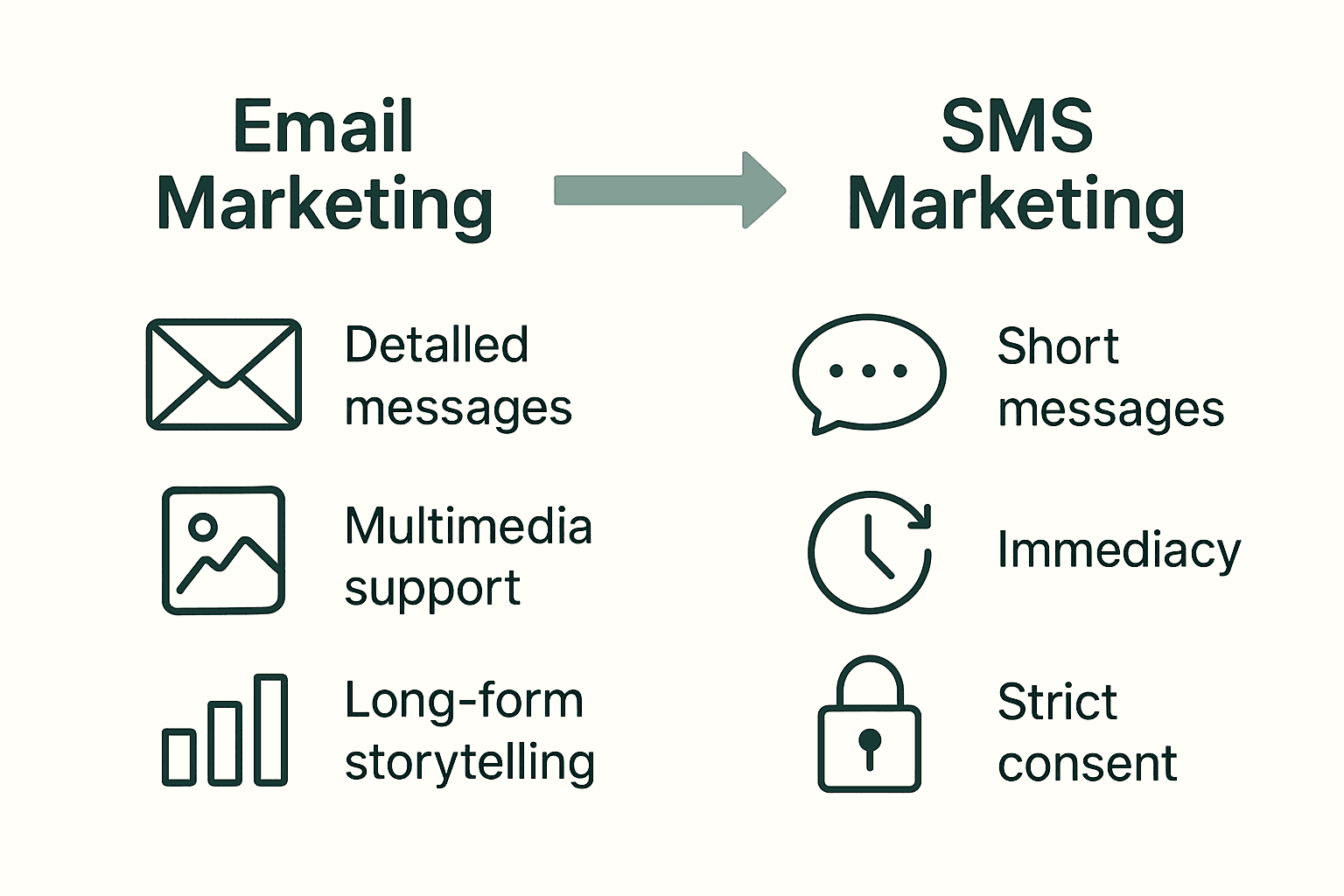
Furthermore, each channel requires distinct compliance and opt-in strategies. Learn more about SMS marketing best practices to understand the intricate rules governing text message marketing. Email typically allows more extended opt-out periods and complex consent mechanisms, while SMS demands more immediate, explicit user permission and stricter regulatory adherence.
Successful modern marketing strategies increasingly recognize these channels not as competing approaches, but as complementary tools. By understanding the unique strengths of email and SMS, marketers can design integrated campaigns that leverage each medium’s distinctive communication attributes, creating a holistic, multi-touchpoint approach to customer engagement.
Legal Considerations And Compliance Requirements
Navigating the complex legal landscape of digital marketing communications requires a comprehensive understanding of regulatory frameworks governing email and SMS marketing. According to Zoho, SMS marketing specifically demands strict adherence to carrier standards and regulations established by authoritative organizations like the Mobile Marketing Association and Interactive Advertising Bureau.
MMA Global highlights critical distinctions in communication protocols, noting that commercial mobile marketing should prioritize SMS channels, as traditional SMTP/email protocols were originally designed for person-to-person traffic and lack inherent reliability for marketing communications.
Key legal compliance requirements for both channels include:
Explore the essential email marketing legal guidelines to understand the nuanced regulatory environment surrounding digital marketing communications. Each channel presents unique challenges: SMS marketing typically requires more immediate and explicit consent, while email marketing allows for more complex consent mechanisms and extended opt-out periods.
Ultimately, successful digital marketing strategies must balance effective communication with rigorous legal compliance. Brands must invest in robust consent management systems, maintain meticulous communication records, and stay current with evolving regulatory landscapes to mitigate potential legal risks and maintain customer trust.
Best Practices For E‑Commerce Success
E‑commerce marketing success hinges on creating sophisticated, integrated communication strategies that leverage both email and SMS channels effectively. These digital platforms offer nuanced opportunities to connect with customers, drive engagement, and ultimately increase conversion rates through strategic, personalized approaches.
Successful e-commerce brands understand that multichannel marketing requires a delicate balance of timing, content, and audience segmentation. Email marketing provides expansive storytelling capabilities, allowing detailed product narratives and comprehensive brand experiences, while SMS delivers immediate, action-oriented communication that drives urgent conversions and time-sensitive promotions.
Key best practices for e-commerce marketing include:
Explore the ultimate email marketing strategy for e-commerce to understand how top brands create seamless, high-converting communication ecosystems. By implementing intelligent automation, maintaining rigorous data hygiene, and crafting messages that resonate with specific customer segments, e-commerce businesses can transform standard marketing communications into powerful revenue generation tools.
Ultimately, the most successful e-commerce marketing strategies transcend individual channel limitations. They create holistic customer journeys that smoothly transition between email and SMS, providing relevant, timely, and personalized experiences that build lasting customer relationships and drive sustainable business growth.
Master Your Email and SMS Marketing with Experts Who Understand Your Challenges
Navigating the unique demands of email versus SMS marketing can feel overwhelming. You want to craft messages that resonate, ensure compliance, and maximize engagement without wasting time on generic campaigns or failing to connect. Whether it’s building precise audience segments, automating personalized flows, or delivering timely, action-driven communications, these challenges require a partner who truly understands the nuances of both channels.
At The Email Marketers, we specialize in retention marketing for e-commerce brands seeking to transform their customer journeys. Our AI-driven approach combines data insights with creative strategy to deliver automated email and SMS campaigns that drive repeat purchases and build loyal communities. Ready to stop guessing and start mastering your multi-channel marketing? Visit our homepage now and explore how our expert team crafts high-converting campaigns tailored for your business. Take the next step toward stronger customer relationships and measurable ROI by partnering with us today at The Email Marketers.
Frequently Asked Questions
What is the main difference between email marketing and SMS marketing?
Email marketing typically supports rich media, longer content, and complex design elements, while SMS marketing focuses on brevity, immediacy, and direct communication, often limiting messages to 160 characters.
How do email and SMS marketing campaigns function?
Both email and SMS marketing campaigns utilize automated systems to segment audiences, personalize content, schedule messages, and track their performance, allowing brands to deliver timely and relevant information to their customers.
What are the key legal considerations for email and SMS marketing?
Legal considerations for both channels include obtaining explicit user consent, providing clear opt-in and opt-out mechanisms, ensuring transparent data handling practices, and adhering to age and jurisdiction-specific restrictions.
What are the best practices for e-commerce success using email and SMS marketing?
Best practices include precise audience segmentation, personalized messaging, strategic timing, integrated cross-channel workflows, data-driven performance tracking, and continuous optimization to enhance customer engagement and conversion rates.


