.png)


Email Marketing Optimization Guide 2025 for Ecom Brands

Learn more about email marketing audits to refine your strategy and maximize campaign effectiveness.
Over 80 percent of ecommerce brands say their email campaigns never reach their full potential. This often comes down to ignoring the basics—healthy lists, smart segments, and personalized content. If you want emails to drive real growth instead of landing in spam, mastering every step from infrastructure audits to advanced AI-powered strategies is critical. This guide breaks down proven tactics so you can send campaigns your customers actually want to open and act on.
Table of Contents
Quick Summary
Key PointExplanation1. Regularly Audit Your Email ListClean your email list every 3 to 6 months to maintain high deliverability and engagement with active subscribers.2. Utilize AI for SegmentationEmploy AI tools to analyze customer data for creating dynamic segments that improve targeting and campaign performance.3. Create Automated Email FlowsDevelop targeted automated email sequences for different customer behaviors to enhance engagement and boost conversions.4. Personalize Your Email ContentTailor email messages based on subscribers’ behaviors and preferences to foster deeper connections and relevance.5. Test and Measure PerformanceImplement an A/B testing strategy to evaluate various elements and refine campaigns based on performance insights.
Step 1: Audit Email Infrastructure and List Health
Auditing your email infrastructure and list health is the strategic foundation for successful email marketing performance. According to research from arxiv.org, understanding email content and metadata is crucial for predicting user response behavior and optimizing communication strategies.
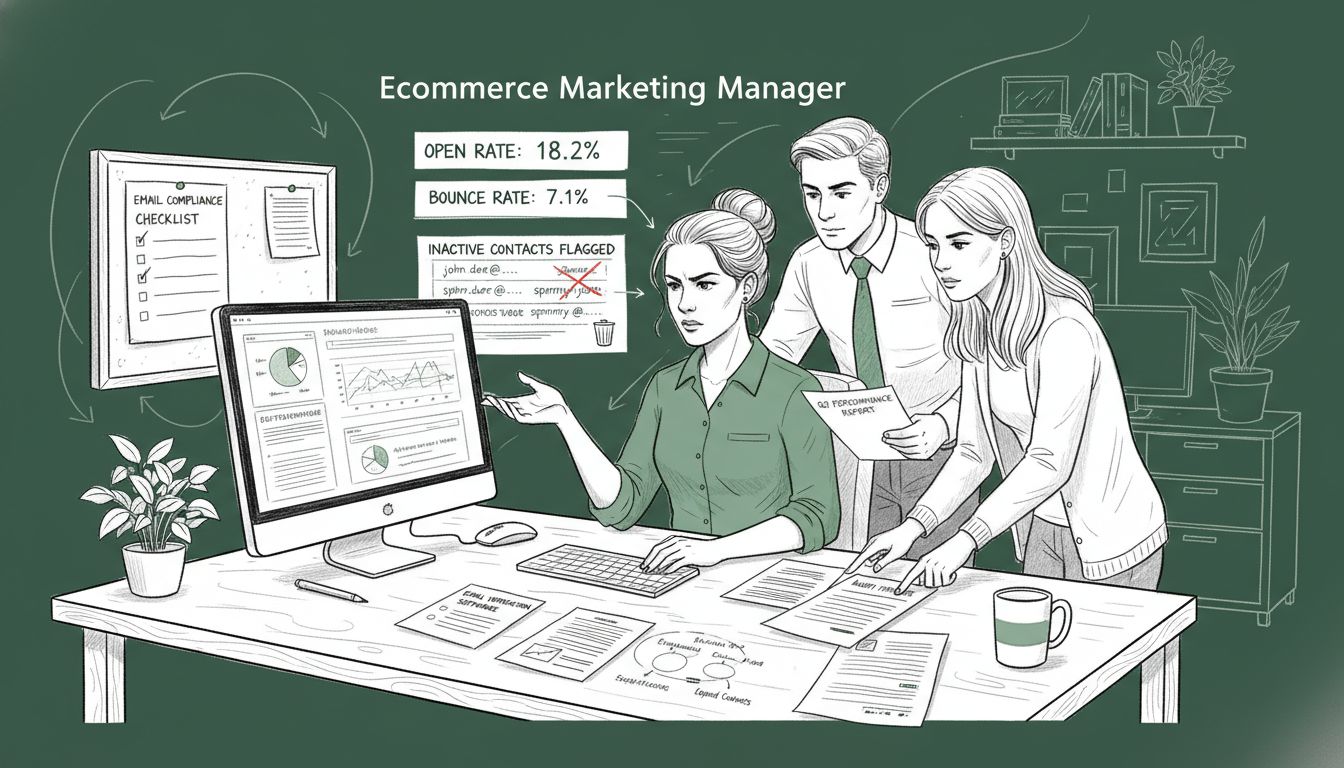
To conduct a comprehensive email infrastructure audit, start by examining your current email list composition. Analyze subscriber engagement metrics such as open rates, click through rates, and bounce rates. Remove inactive subscribers who have not engaged with your emails in the past 6 months to maintain a clean and responsive list. As the arxiv.org research suggests, detecting personalized email communication patterns can significantly enhance overall engagement.
Key audit activities include verifying email list quality, checking sender reputation, and ensuring compliance with email marketing regulations. Validate email addresses using email verification tools to reduce bounce rates and protect your sender score. Segment your list based on subscriber behavior and preferences to create more targeted and personalized email campaigns. Implement re-engagement campaigns for dormant subscribers and consider a sunset policy for consistently unresponsive contacts to maintain list health and deliverability.
Pro Tip: Regularly clean your email list every 3 to 6 months to maintain high deliverability rates and ensure your marketing efforts reach genuinely interested subscribers.
Step 2: Build AI-Driven Segmentation Strategies
AI-driven segmentation strategies represent the cutting edge of personalized marketing, transforming how ecommerce brands understand and engage their customers. According to research from ijsat.org, AI-powered tools can analyze customer data to uncover intricate trends and optimize resource allocation through enhanced segmentation techniques.
To build an effective AI-driven segmentation strategy, start by consolidating customer data from multiple sources including purchase history, browsing behavior, demographic information, and engagement metrics. Leverage machine learning algorithms to identify complex patterns and create dynamic customer segments that go beyond traditional demographic classifications. The research from ijsem.org emphasizes developing precise targeting strategies that can significantly improve campaign performance by understanding nuanced customer behaviors.
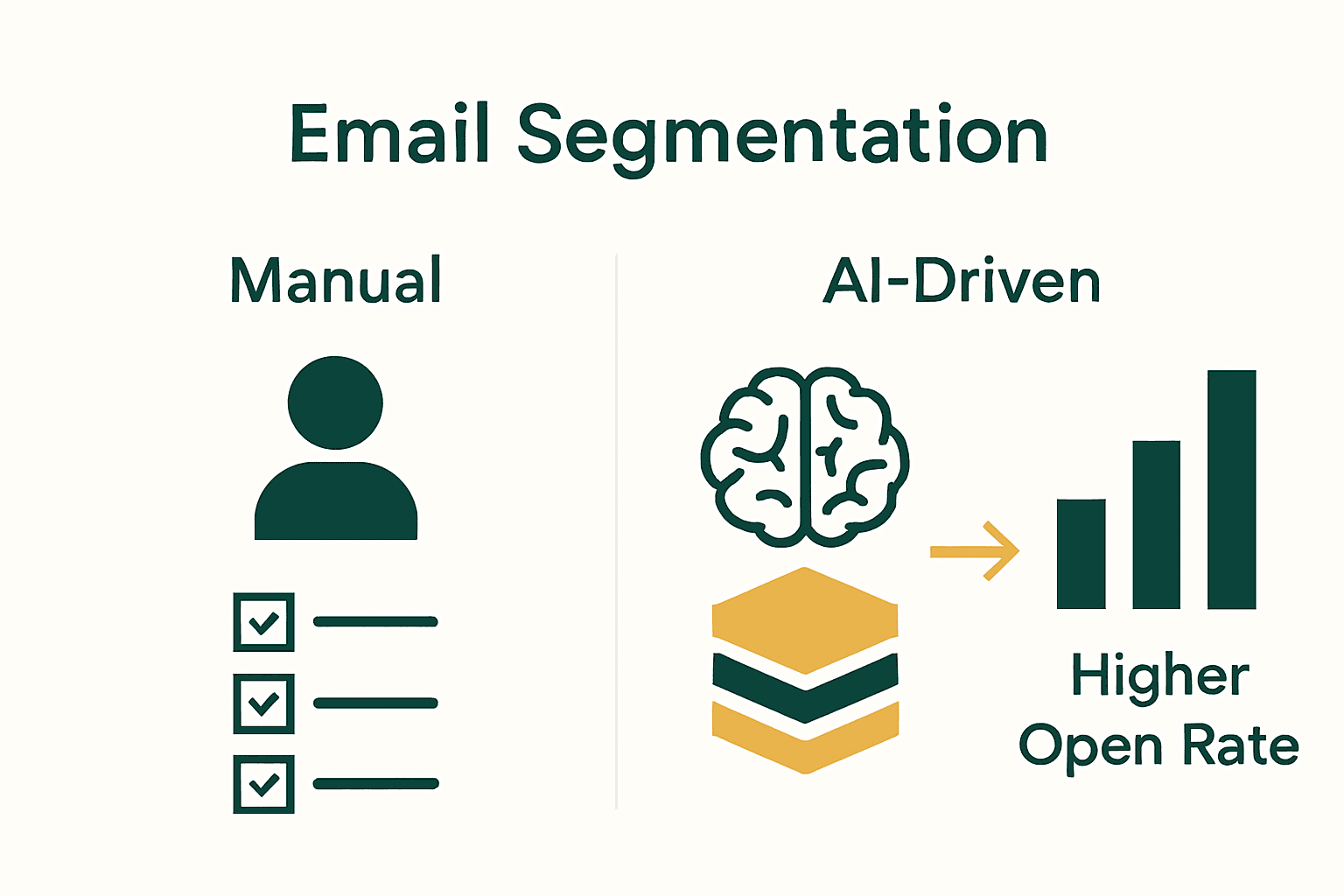
Implement advanced segmentation techniques such as predictive modeling, which uses historical data to forecast future customer actions. Create personalized customer journeys by developing segment-specific content and communication strategies. This might include tailored product recommendations, customized email messaging, and targeted promotional offers that speak directly to each segment’s unique characteristics and preferences.
Pro Tip: Continuously refine your AI segmentation models by regularly feeding new data and performance metrics into your machine learning system. This iterative approach ensures your segmentation strategies remain dynamic and responsive to changing customer behaviors and market trends.
Step 3: Develop High-Converting Automated Flows
Creating high-converting automated email flows is a critical strategy for ecommerce brands looking to maximize customer engagement and revenue. According to kovench.com, AI-driven email marketing automation enables sophisticated strategies like subject line optimization and tone adaptation to enhance conversion rates.
To develop effective automated flows, map out your customer journey and identify key touchpoints where targeted emails can drive engagement. Explore the best email flows that align with different stages of the customer lifecycle. Research from alore.io highlights the importance of AI-powered techniques such as automated follow-ups and intelligent A/B testing to create more responsive and personalized email sequences.
Prioritize creating segmented automated flows that respond to specific customer behaviors. Design welcome series for new subscribers, abandoned cart recovery sequences, post-purchase follow-ups, and re-engagement campaigns for inactive customers. Implement dynamic content that adapts based on individual customer data, ensuring each automated email feels personalized and relevant to the recipient.
Pro Tip: Continuously monitor and optimize your automated flows by tracking key performance metrics like open rates, click through rates, and conversion rates. Use these insights to refine your email sequences and improve their effectiveness over time.
Step 4: Personalize Campaign Content for Impact
Personalizing email campaign content is crucial for breaking through the noise and creating meaningful connections with your audience. According to emulent.com, AI-driven segmentation enables brands to tailor email content by aligning messages precisely with subscriber behaviors and preferences.
Understanding email personalization goes beyond simply inserting a first name. Develop a comprehensive personalization strategy that leverages customer data such as purchase history, browsing behavior, geographic location, and past engagement. Create dynamic content blocks that automatically adjust based on individual subscriber attributes, ensuring each recipient receives a uniquely relevant message that speaks directly to their interests and needs.
Implement advanced personalization techniques like product recommendations based on previous purchases, custom content segments that reflect customer lifecycle stages, and triggered emails that respond to specific customer actions. Use AI tools to generate variations of email copy that resonate with different customer segments, optimizing language tone and messaging to match each group’s communication preferences. Develop a nuanced approach that makes subscribers feel understood rather than simply marketed to.
Pro Tip: Regularly audit and refresh your personalization data to maintain accuracy. Customer preferences evolve quickly, so continuously update your segmentation criteria and personalization rules to ensure your email content remains highly relevant and engaging.
Step 5: Test, Measure, and Refine Email Performance
Testing and measuring email performance is the cornerstone of continuous marketing improvement. According to anyleads.com, AI enables predictive modeling and behavior-based micro-segmentation to dramatically enhance email marketing strategies.
Email A/B testing provides critical insights into your campaign effectiveness. Develop a systematic testing approach that evaluates multiple variables including subject lines, send times, content layout, and call to action design. Research from topmostads.com emphasizes the importance of advanced AI-driven segmentation strategies to optimize campaign personalization and performance.
Implement a comprehensive measurement framework that tracks key performance indicators such as open rates, click through rates, conversion rates, and revenue generated. Use advanced analytics tools to create detailed performance dashboards that provide granular insights into subscriber behavior. Develop a continuous improvement cycle where test results directly inform your next iteration of email marketing strategies. Pay special attention to segment-specific performance metrics to understand how different audience groups respond to various messaging approaches.
Pro Tip: Create a standardized testing protocol that allows you to isolate and measure the impact of individual variables. Maintain a testing calendar that ensures consistent evaluation and optimization of your email marketing performance.
Unlock Your Ecommerce Growth with Expert Email Marketing Optimization
The article highlights the challenge ecommerce brands face in mastering AI-driven segmentation, maintaining clean and engaged email lists, and crafting automated flows that truly convert. If you are struggling to move past generic campaigns and need to personalize every customer interaction to boost repeat purchases and maximize ROI, this is the opportunity you cannot miss. Key pain points such as list health, dynamic segmentation, and continuous performance testing demand a strategic partner who understands the nuances of your customer journey and can translate data insights into actionable email and SMS marketing strategies.
At The Email Marketers, we specialize in exactly these challenges. Our expert team excels in building high-converting automated flows and developing cutting-edge AI segmentation to deliver personalized campaigns that resonate deeply with your audience. Whether you want to optimize your existing email infrastructure or build comprehensive retention strategies, we combine creative strategy with data-driven precision to transform your brand’s email marketing impact. Discover how our approach to automated email flows and AI-powered segmentation can help you reach the next level of ecommerce growth.
Ready to stop guessing and start converting more customers through strategic email marketing tailored for ecommerce? Visit The Email Marketers now to schedule a consultation and see how we can bring your email campaigns into 2025 with real results.
Frequently Asked Questions
How do I audit my email infrastructure for optimization?
Start by analyzing your email list health, checking metrics like open rates and bounce rates. Regularly clean your list by removing inactive subscribers who haven’t engaged in the last 6 months to maintain responsiveness.
What are some effective AI-driven segmentation strategies for email marketing?
Use AI tools to analyze customer data from various sources and create dynamic segments based on behavior, preferences, and demographics. This could involve analyzing purchase histories to tailor your email campaigns more effectively.
How can I develop high-converting automated email flows?
Map out your customer journey to identify key touchpoints for engagement. Create targeted automated flows for scenarios like abandoned carts or post-purchase follow-ups to drive conversions more effectively.
What personalization techniques should I implement for my email campaigns?
Focus on utilizing customer data such as purchase history and browsing behavior to create highly relevant email content. Implement dynamic content that adjusts automatically based on individual attributes to enhance engagement.
How do I measure and refine my email marketing performance?
Establish a comprehensive measurement framework to track key metrics like open rates, click-through rates, and conversion rates. Regularly analyze this data to refine your email strategies and improve performance over time.


