.png)


Email marketing design best practices for ecommerce 2026

Many ecommerce marketers believe that flashy graphics and multiple calls to action guarantee email success. In reality, cluttered designs with competing CTAs often confuse subscribers and tank conversion rates. The truth? High-performing ecommerce emails rely on strategic simplicity, precise placement, and data-backed design principles that drive measurable ROI. This guide reveals the proven best practices transforming email marketing design in 2026, from optimal HTML sizing and AI-generated content to list hygiene tactics that boost engagement and revenue. You’ll discover actionable strategies to create emails that stand out in crowded inboxes and convert browsers into loyal customers.
Table of Contents
- Why Email Design Matters In Ecommerce Marketing
- Core Email Design Best Practices For 2026
- Advanced Tactics: AI Content And List Hygiene For Higher ROI
- Design Trends Shaping Email Marketing In 2026
- Enhance Your Ecommerce Email Marketing With The Email Marketers
- FAQ
Key takeaways
| Point | Details |
|---|---|
| Single CTA focus | One prominent call to action above the fold drives significantly higher click-through rates than multiple competing buttons. |
| Lightweight HTML | Keeping email size under 102KB with 60:40 text-to-image ratio prevents clipping and improves deliverability across all clients. |
| AI content advantage | AI-generated personalized email content can double purchase rates compared to traditional human-written campaigns. |
| List hygiene impact | Removing inactive subscribers after 90-120 days and implementing frequency caps dramatically improves engagement metrics. |
| Visual hierarchy | Strategic color contrast, centered CTAs, and scannable content structure enhance user experience and conversion rates. |
Why email design matters in ecommerce marketing
Email marketing consistently delivers the highest ROI among digital channels for ecommerce brands. Design directly impacts every metric that matters: open rates, click-through rates, and revenue per send. Average open rates range from 38%-49%, with CTR around 3.1%, but top performers achieve dramatically better results through optimized design. The gap between mediocre and exceptional campaigns often comes down to strategic design choices that enhance deliverability, visual appeal, and user experience.
Successful email design addresses multiple interconnected factors. Load time affects whether your message displays properly or gets clipped. Content balance determines readability and engagement. CTA placement influences conversion rates. Personalization and segmentation ensure relevance. Each element works together to either elevate or undermine campaign performance. When you nail these fundamentals, revenue per email ranges from $0.08 to $0.35 depending on execution quality.
Good design also reduces subscriber fatigue. Bombarding customers with poorly designed emails trains them to ignore your messages or unsubscribe entirely. Strategic design respects their attention and delivers value in every send. This builds trust and encourages ongoing engagement rather than eroding your relationship with each campaign.
Key design factors impacting your email marketing benchmark insights include:
- Email file size and load time optimization
- Text-to-image ratio for maximum readability
- CTA button placement, color, and quantity
- Personalization depth and relevance
- Segmentation precision and targeting
- Mobile responsiveness and dark mode compatibility
“Design isn’t just about aesthetics. It’s the foundation of deliverability, engagement, and conversion. Every pixel serves a purpose in guiding subscribers toward action.”
The brands winning in 2026 treat email design as a strategic discipline, not an afterthought. They test relentlessly, measure obsessively, and optimize continuously based on data rather than assumptions.
Core email design best practices for 2026
Optimal email size remains critical for deliverability and user experience. Keeping emails under 102 KB with a 60:40 text-to-image ratio prevents Gmail and other providers from clipping your content. Aim for 30-50KB HTML to ensure fast loading across all devices and connections. Heavy emails frustrate mobile users and damage engagement before subscribers even see your message.
Balanced text and images enhance readability while maintaining visual interest. The 60:40 ratio ensures your email remains accessible even when images don’t load. Text-heavy emails feel overwhelming, while image-heavy designs risk being flagged as spam or appearing broken. This balance also supports screen readers and improves accessibility for all subscribers.
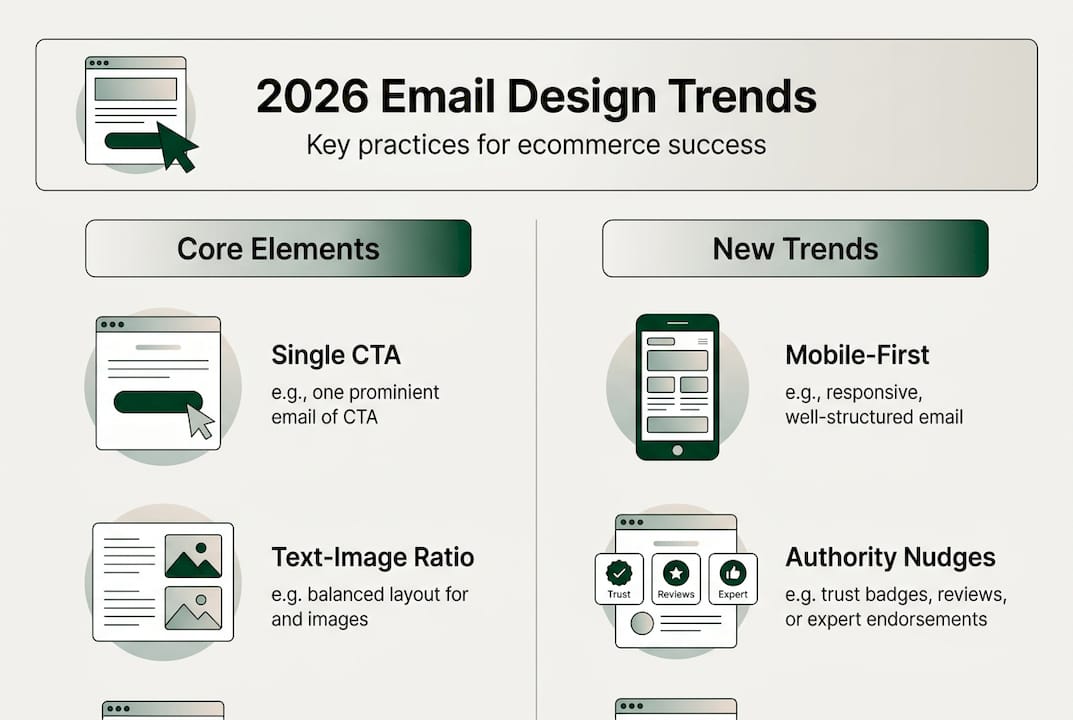
CTA design makes or breaks conversion rates. One primary CTA above the fold, centered with contrasting color drives better clicks than multiple competing buttons. When you present subscribers with too many choices, decision fatigue sets in and they choose nothing. A single bold CTA eliminates confusion and creates clear direction for the desired action.
Your email CTAs best practices should prioritize visibility and contrast. Use colors that pop against your background while maintaining brand consistency. Center placement draws the eye naturally as subscribers scan your content. Button size matters too: make it large enough for easy mobile tapping without dominating the entire viewport.
Pro Tip: Run A/B tests comparing CTA button text, color combinations, and placement variations. Even small changes like “Shop Now” versus “Get Yours” can shift conversion rates by 20% or more depending on your audience and offer.
Keep content scannable with concise copy and clear hierarchy. Most subscribers skim rather than read every word. Use short paragraphs, descriptive subheadings, and bullet points to guide their eyes to key information. White space isn’t wasted space; it creates breathing room that makes your message more digestible and less intimidating.
Following these email marketing best practices establishes a solid foundation. Consistency across campaigns trains subscribers to recognize and engage with your emails quickly. When design becomes predictable in the best way, subscribers know exactly where to look for value and how to take action.
Advanced tactics: AI content and list hygiene for higher ROI
Leveraging AI to generate dynamic, personalized content represents a game-changing opportunity for ecommerce marketers. AI-generated email content doubled purchase incidence in multiple randomized control trials compared to human-written campaigns. AI excels at analyzing customer data to craft messages that resonate with individual preferences, browsing history, and purchase patterns. This level of personalization at scale was impossible just a few years ago.
Implementing frequency caps prevents subscriber burnout and maintains long-term engagement. Frequency caps and removing unengaged contacts after 90-120 days improves campaign results by focusing your efforts on responsive subscribers. When you email too often, even loyal customers tune out. Strategic frequency management respects their inbox while keeping your brand top of mind.
Regular list hygiene protects your sender reputation and engagement metrics. Inactive subscribers drag down open rates and signal to email providers that your content lacks value. Conduct quarterly audits to identify and sunset contacts who haven’t engaged in 90-120 days. This pruning feels counterintuitive but consistently improves overall performance.
Segment lists by customer margin and behavior for precise targeting. High-value customers deserve different messaging than bargain hunters. First-time buyers need nurturing sequences while repeat purchasers respond to loyalty rewards. Behavioral triggers like abandoned carts or product views enable timely, relevant outreach that converts.
Follow this list hygiene process for optimal results:
- Identify subscribers with zero opens or clicks in the past 90 days
- Send a re-engagement campaign offering compelling value or asking for preference updates
- Remove non-responders after 120 days total inactivity
- Implement frequency caps based on subscriber engagement levels
- Monitor deliverability metrics and adjust thresholds as needed
| Metric | AI Content Performance | Human Content Performance |
|---|---|---|
| Purchase Rate | 4.2% | 2.1% |
| Click-Through Rate | 8.7% | 5.3% |
| Revenue Per Email | $0.31 | $0.19 |
| Engagement Score | 7.8/10 | 5.4/10 |
Pro Tip: Combine AI content generation with behavioral segmentation to maximize relevance and ROI. Let AI analyze purchase patterns and browsing data to craft personalized product recommendations while your team focuses on strategic campaign planning and creative direction.
The brands achieving exceptional results in 2026 treat their email lists as living assets requiring constant optimization. They personalize email content based on real-time data, implement sophisticated email segmenting tips, and continuously refine their approach to optimize email ROI tactics through rigorous testing and measurement.
Design trends shaping email marketing in 2026
Authority nudges in sender names and subject lines create psychological triggers that boost short-term open rates. Authority nudges in sender and subject lines increase short-term open rates but effects may fade over time as subscribers become accustomed to the tactic. Using credible sender names like “Sarah from [Brand]” or incorporating social proof in subject lines taps into our natural tendency to trust recognized authorities. However, overuse diminishes impact, so rotate approaches strategically.
The trend toward minimalist, mobile-first designs dominates 2026 email marketing. Clean visuals, generous white space, and fast-loading templates prioritize user experience over decorative elements. Mobile devices account for the majority of email opens, making responsive design non-negotiable. Subscribers expect instant loading and effortless navigation regardless of screen size or connection speed.
| Design Element | Traditional Approach | 2026 Best Practice | Impact on Metrics |
|---|---|---|---|
| Layout Complexity | Multi-column, dense | Single column, spacious | 35% higher mobile engagement |
| Image Count | 8-12 per email | 3-5 strategic images | 28% faster load times |
| CTA Quantity | 3-5 competing buttons | 1 primary CTA | 42% higher click-through |
| Personalization | Basic name merge | AI-driven dynamic content | 2x purchase conversion |
Psychological triggers in design extend beyond authority to include urgency, social proof, and exclusivity. Limited-time offers with countdown timers create urgency that drives immediate action. Customer testimonials and review snippets provide social proof that reduces purchase hesitation. VIP or early access messaging makes subscribers feel valued and special.
Top emerging trends reshaping email design include:
- Dark mode compatibility ensuring readability across light and dark displays
- Interactive elements like polls, quizzes, and image carousels that boost engagement
- AI personalization generating unique content for each subscriber
- Accessibility features including alt text and semantic HTML for screen readers
- Animated GIFs and subtle motion that capture attention without overwhelming
Adapting designs to evolving subscriber preferences requires continuous testing and feedback collection. What worked last quarter may underperform today as inbox competition intensifies and subscriber expectations rise. Monitor engagement patterns closely and be willing to abandon tactics that stop delivering results.
The most successful brands in 2026 study email design examples from across industries, extracting principles rather than copying templates. They apply email marketing design best practices while maintaining brand authenticity and testing innovations that differentiate their campaigns from competitors.
Enhance your ecommerce email marketing with The Email Marketers
The Email Marketers specializes in retention marketing strategies that transform email design from pretty templates into revenue-generating machines. Our team combines data-driven insights with creative excellence to build automated flows, segmentation strategies, and high-converting campaigns for 8-figure DTC brands and growth-focused retailers. We don’t just design emails; we architect customer journeys that maximize lifetime value and build lasting community.
Access our Retention Lab for hands-on workshops and advanced tactics that elevate your email marketing performance. Explore our Retention Toolkit featuring templates, frameworks, and resources proven to increase repeat purchases. Review our case study demonstrating real ROI improvements for brands implementing these best practices with expert guidance.
Partner with specialists who understand that effective email marketing requires more than design skills. It demands strategic thinking, technical expertise, and relentless optimization focused on measurable results that matter to your bottom line.
FAQ
What is the ideal size for ecommerce marketing emails?
Emails should be kept under 102KB HTML with a 60:40 text-to-image ratio to prevent clipping and ensure proper display across all email clients. Aim for 30-50KB total to guarantee fast loading on mobile devices and slower connections. Lightweight emails improve deliverability rates and subscriber experience while reducing the risk of spam filtering.
How many CTAs should I include in my email campaigns?
A single primary CTA placed above the fold and centered outperforms multiple competing calls to action by eliminating decision fatigue. Use contrasting colors that stand out against your design while maintaining brand consistency. Multiple CTAs confuse subscribers and dilute conversion rates by forcing them to choose between competing actions.
Can AI-generated content improve email marketing performance?
AI content creates more relevant, engaging messages by analyzing customer data and personalizing at scale. AI-generated content doubled purchase incidence compared to human-written content in randomized controlled trials across multiple ecommerce brands. The technology excels at crafting individualized product recommendations and messaging that resonates with specific subscriber preferences and behaviors.
What is list hygiene and why is it important?
List hygiene means removing unengaged contacts after 90-120 days and capping frequency to maintain a healthy, responsive subscriber base. Clean lists enhance engagement rates, protect sender reputation, and reduce spam complaints. Regular pruning focuses your efforts on subscribers who actually want to hear from you, improving overall campaign performance and ROI.


