.png)


Ecommerce Drip Campaigns: Essential Guide for Brands

Over 75 percent of online shoppers expect brands to send relevant and timely emails. In a crowded ecommerce space, it takes more than generic promotions to win attention and loyalty. Drip campaigns are changing the game by delivering personalized messages based on each customer’s actions and preferences. Brands that harness this approach can build trust, recover lost sales, and grow customer value through a smarter, more connected communication strategy.
Table of Contents
Key Takeaways
PointDetailsEffective Drip Campaigns Enhance EngagementAutomated messaging tailored to customer behaviors leads to significantly improved engagement and conversion rates.Segmentation is CrucialUtilizing sophisticated segmentation strategies allows brands to deliver hyper-targeted content that resonates with individual customers.Avoid Common PitfallsBrands should focus on personalized content and be mindful of communication frequency to avoid disengaging subscribers.Continuous Optimization is KeyRegularly analyzing performance metrics and iterating communication strategies ensures that campaigns remain effective and relevant.
Defining Ecommerce Drip Campaigns for Brands
Drip marketing is a strategic communication approach that transforms how ecommerce brands engage with customers through automated, targeted messaging. According to Speedcommerce, this strategy involves gradually releasing information to recipients, much like water dripping from a faucet, allowing businesses to maintain consistent and personalized communication throughout the customer journey.
At its core, a drip campaign is a series of pre-written, automatically triggered messages designed to nurture leads, guide potential customers through the sales funnel, and ultimately drive conversions. Wikipedia highlights two key distinguishing characteristics of drip marketing: first, the messages follow a predetermined timing sequence, and second, they are specifically tailored to a recipient’s behavior or status.
For ecommerce brands, drip campaigns serve multiple strategic purposes:
The power of drip campaigns lies in their ability to create a personalized customer journey. Instead of generic, one-size-fits-all communication, these automated sequences adapt to individual customer interactions, preferences, and purchase history. By delivering the right message at the right time, brands can significantly enhance customer engagement, loyalty, and lifetime value.
Ready to transform your customer communication strategy? Learn more about crafting effective email drip campaigns and unlock the potential of automated, targeted messaging for your ecommerce brand.
Types of Drip Campaigns in Ecommerce
Ecommerce brands leverage various drip campaign types to engage customers, nurture relationships, and drive sales. EDUCBA highlights three fundamental campaign strategies that have proven exceptionally effective for online businesses.
The first critical type is the Welcome Drip Campaign. This initial communication sequence introduces new subscribers to your brand, establishing trust and setting expectations from the very first interaction. As EDUCBA explains, these campaigns establish the tone for future correspondence and foster early engagement by providing a warm, personalized introduction to your brand’s unique value proposition.
Another powerful drip campaign variant is the Abandoned Cart Recovery. When potential customers leave items in their online shopping cart without completing the purchase, these targeted messages can re-engage them by:
Additionally, Lead Nurturing Drip Campaigns play a crucial role in guiding potential customers through the sales funnel. These strategic message sequences educate prospects, showcase your product’s value, and gradually build trust by delivering relevant, valuable content that addresses their specific needs and pain points.
For brands seeking to optimize their customer communication, dive deeper into drip email marketing strategies and unlock the full potential of automated, personalized messaging.
How Ecommerce Drip Campaigns Work
Automated messaging transforms how ecommerce brands communicate with customers. According to Speedcommerce, drip marketing operates like a carefully orchestrated communication strategy, gradually releasing targeted messages to recipients “much like water dripping from a faucet” - guiding prospects through the sales journey with precision and personalization.
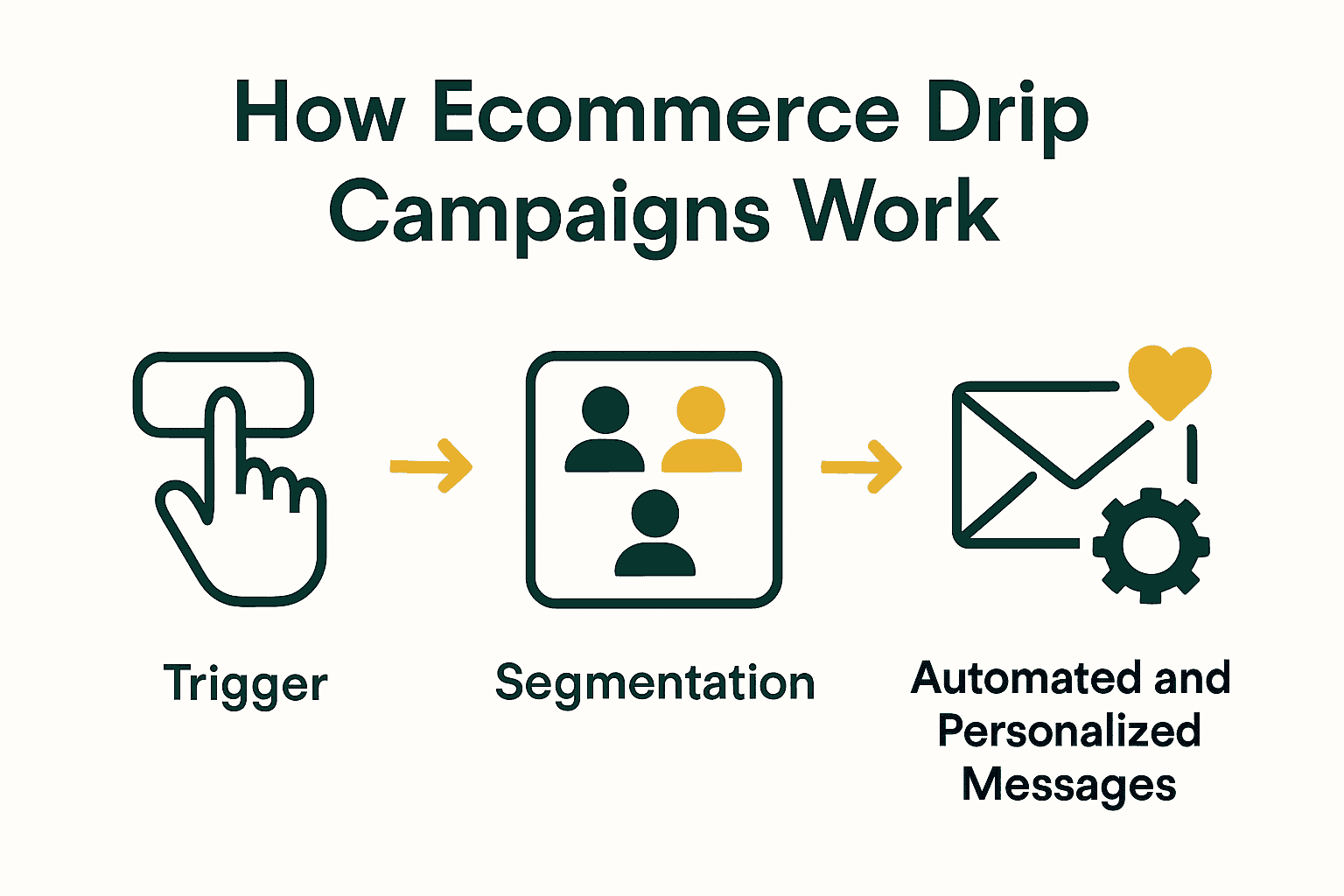
EDUCBA reveals that drip campaigns are fundamentally distinguished by two critical characteristics: predetermined message timing and recipient-specific content sequencing. This means each message is strategically triggered based on specific customer behaviors, interactions, or status within the purchasing funnel.
The mechanics of an effective ecommerce drip campaign involve several key components:
Successful drip campaigns require sophisticated marketing technology that can track customer interactions, analyze behavioral data, and automatically dispatch precisely timed messages. This approach enables brands to create hyper-personalized customer experiences that feel individualized and responsive.
Learn more about crafting strategic email marketing workflows and unlock the potential of intelligent, automated customer communication strategies.
Segmentation and Personalization Strategies
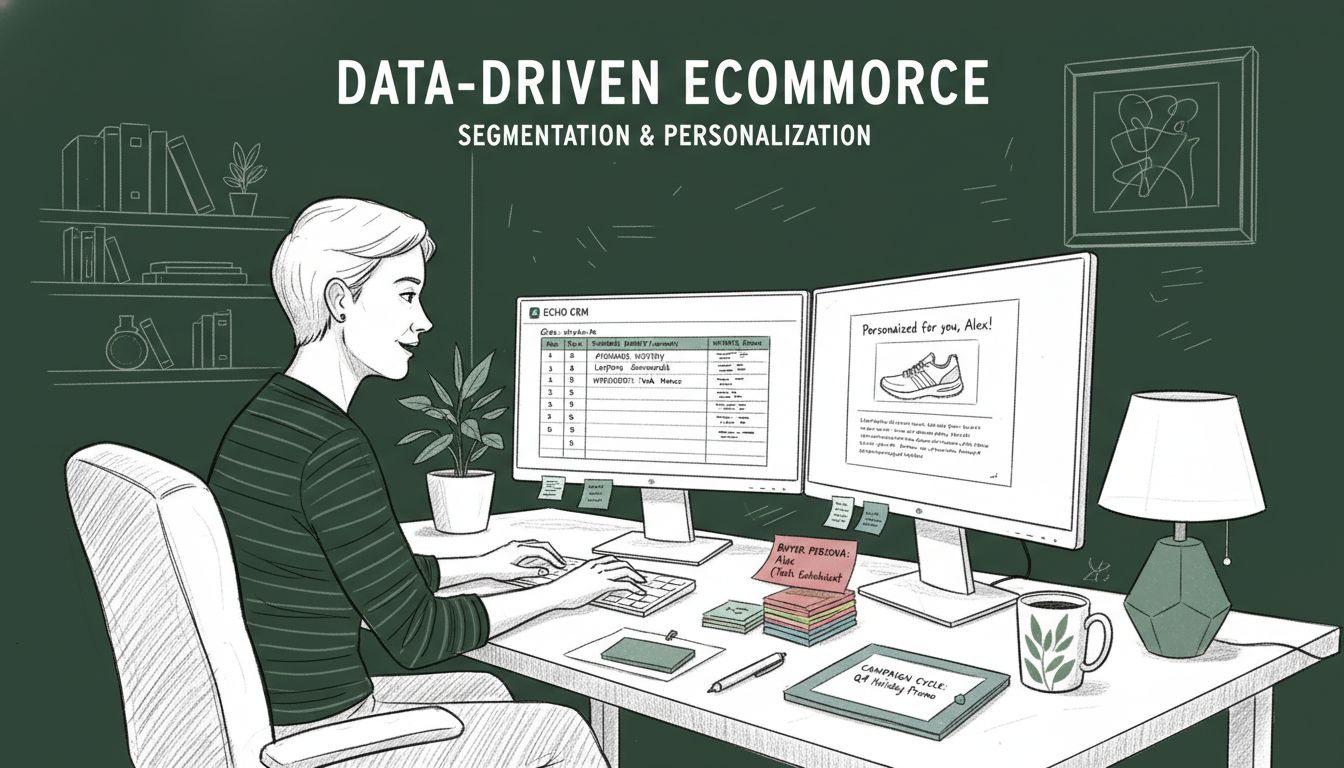
Customer segmentation is the cornerstone of effective ecommerce drip campaigns, transforming generic messaging into precision-targeted communication. Digideo highlights that successful strategies go beyond basic demographic sorting, diving deep into nuanced customer behaviors and potential engagement opportunities.
Effective segmentation involves multiple sophisticated approaches:
Personalization takes segmentation a step further by crafting hyper-targeted messaging that speaks directly to individual customer needs. As Digideo suggests for B2B contexts, this might involve creating specialized content like targeted whitepapers, personalized product demos, or account-specific communication sequences that address unique pain points.
The most advanced personalization strategies leverage real-time data and machine learning algorithms to dynamically adjust messaging. This means each customer receives content that feels uniquely crafted for their specific interests, recent interactions, and potential future needs.
Discover advanced email marketing segmentation techniques to unlock the full potential of personalized customer communication.
Avoiding Common Drip Campaign Mistakes
Drip campaign failures often stem from overlooking critical strategic nuances that can derail even the most well-intentioned marketing efforts. Digideo emphasizes that successful campaigns require more than just automated messaging - they demand sophisticated, targeted approaches that genuinely address customer needs.
The most prevalent mistakes ecommerce brands encounter include:
When designing drip campaigns, brands must prioritize strategic content delivery. As Digideo suggests for B2B contexts, this means crafting targeted resources like whitepapers, product demos, and success-oriented content that genuinely adds value for each customer segment.
The most sophisticated brands approach drip campaigns as dynamic, living strategies - continuously monitoring performance, analyzing customer responses, and rapidly iterating their communication approach. This means implementing robust tracking mechanisms, embracing data-driven insights, and maintaining an agile, customer-centric mindset.
Explore our comprehensive guide to avoiding email marketing pitfalls and transform your drip campaign strategy from mediocre to exceptional.
Elevate Your Ecommerce Drip Campaigns with Expert Support
Struggling to overcome common drip campaign challenges like generic messaging, poor timing, or ineffective segmentation? This article shows how targeted, automated messaging can transform customer engagement and boost conversions through strategic drip marketing. If you want your ecommerce brand to move beyond basic automation and deliver truly personalized experiences that nurture leads and recover abandoned carts, you are ready for the next level.
At The Email Marketers, we specialize in crafting AI-driven email and SMS campaigns that align perfectly with the key concepts in this guide. Our expert team builds optimized automated flows and dynamic segmentation strategies that ensure every message hits the right customer at exactly the right moment. Discover how sophisticated retention marketing solutions can increase your customer lifetime value and turn occasional buyers into loyal fans. Ready to break free from ineffective drip campaigns and see measurable results? Visit The Email Marketers now and start transforming your customer journeys today. Learn more about building strategic email workflows and advanced email segmentation tactics to maximize your campaign impact.
Frequently Asked Questions
What is an ecommerce drip campaign?
An ecommerce drip campaign is a series of automated, pre-written messages designed to engage customers, nurture leads, and guide potential buyers through the sales funnel. These messages are triggered based on specific customer behaviors and preferences.
How do I create an effective drip campaign for my brand?
To create an effective drip campaign, define your target audience, segment your customers based on behaviors and preferences, design a logical flow of messages, personalize content for individual recipients, and utilize automation technology to manage the campaigns.
What are the key types of drip campaigns used in ecommerce?
The key types of drip campaigns in ecommerce include Welcome Drip Campaigns (for new subscribers), Abandoned Cart Recovery campaigns (to re-engage potential customers who left items in their carts), and Lead Nurturing campaigns (to guide prospects through the sales process with tailored content).
What are common mistakes to avoid when implementing drip campaigns?
Common mistakes to avoid include over-messaging (sending too many emails), using generic content instead of personalized messages, ignoring engagement metrics, presenting an inconsistent brand voice, and poor timing of messages, which can lead to customer disengagement.


